Seller Financing Explained: How It Works and When to Walk Away
 Alex Wright
A few years ago, my wife and I came very close to buying a small motel here in Wyoming.
It wasn't a perfect property. The rooms were clean but everything felt stuck somewhere in the 1980s — heavy wood furniture, dated finishes, the kind of bright patterned bedspreads you don't see anymore. Good bones. Desperately needed someone to modernize it.
That actually appealed to us.
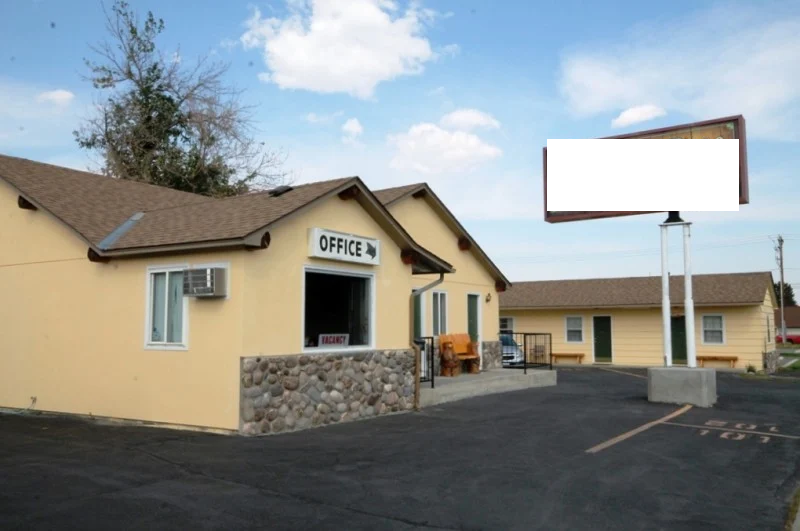
Our plan was straightforward: operate through the busy summer tourism season, generate income while learning the business, then use the slower winter months to renovate rooms, improve the curb appeal, and reposition for the following summer.
The numbers worked. The business made sense.
And the seller was willing to finance the purchase himself.
That last part was one of the biggest reasons we pursued it. The purchase price was around $1.3 million — a little higher than we'd originally hoped — but the owner financing terms were attractive enough that the overall investment still penciled.
Then one sentence changed everything.
The seller wouldn't sell unless the transaction was structured as a Contract for Deed.
That became the reason we walked away. Not because seller financing is bad. Because not every form of seller financing offers the same protections.
Seller Financing Isn't One Thing
One misconception I see fairly often is treating “seller financing” as a single type of transaction. It isn't.
Several different legal structures fall under that umbrella. Some provide buyers with title immediately while the seller simply acts as the lender. Others work very differently — and the difference matters enormously, especially if you plan to make improvements to the property.
| Structure | When Title Transfers | Common In | Key Consideration |
|---|---|---|---|
| Purchase Money Mortgage | At closing | Most states | Buyer holds title; seller has a lien (similar to a bank mortgage) |
| Contract for Deed | After full payoff | Midwest, rural markets | Seller retains legal title until contract is satisfied |
| All-Inclusive Trust Deed (AITD) | At closing | Western states | Seller's existing mortgage remains — risk if seller defaults upstream |
| Lease-Option | Upon exercise | All states | Option may not convert if buyer fails to meet conditions |
How Seller Financing Works
Traditional financing moves through a bank:
Bank → lends to Buyer → Buyer acquires Property
Seller financing removes the bank. The seller extends credit directly:
Seller → lends to Buyer → Buyer acquires Property
Everything from the interest rate to the amortization schedule, balloon payment, down payment, and repayment timeline can often be customized. This flexibility is one of owner financing's greatest advantages over conventional loans.
For context on how this financing type fits into the broader landscape, the real estate investment financing guide covers how seller financing compares to DSCR loans, bridge loans, SBA, and other options by investment strategy.
What's Negotiable
| Term | Conventional Bank | Seller Financing |
|---|---|---|
| Down payment | 15 – 25% | 5 – 30%+ (whatever you negotiate) |
| Interest rate | Market rate (7 – 9%) | Negotiated — often 5 – 8% |
| Amortization | 15 or 30 years | 10 – 30 years |
| Balloon payment | Rare | Common — typically 5 – 10 years |
| Closing speed | 30 – 60 days | Days to weeks |
| Income documentation | Full — W-2, tax returns, DTI | Often minimal or none |
| Prepayment penalty | Minimal | Varies — negotiate this explicitly |
Why Buyers and Sellers Both Choose Seller Financing
From the Buyer's Perspective
In our case, the financing terms themselves were actually one of the most attractive parts of the deal. Seller financing can offer:
- Flexible qualification — no bank underwriting, no DTI limits
- Below-market interest rates (if the seller agrees)
- Faster closings than institutional financing
- Creative structures that banks simply won't do
- Access to properties banks are reluctant to finance (older motels, rural commercial, unique assets)
From the Seller's Perspective
Owner financing can also make strategic sense for sellers:
- Generates ongoing interest income at attractive rates
- Expands the buyer pool for hard-to-finance properties
- Can spread taxable capital gains through installment sale treatment
- Helps close deals in thin markets where conventional buyers struggle to qualify
Where Our Comfort Level Changed
Everything was moving in the right direction until we learned the seller intended to structure the transaction as a Contract for Deed.
Like many buyers, I had initially assumed seller financing simply meant the seller would act as the bank — we'd get title at closing, make payments to the seller instead of a lender, and that was that.
A Contract for Deed works differently. In many states, the buyer takes possession and begins making payments, but legal title remains with the seller until all contract obligations have been fully satisfied. The buyer's rights vary significantly by state — which is part of why this structure warrants careful legal review.
That mattered for us because of our renovation plans.
Why the Title Structure Worried Us
Our entire investment thesis involved improving the property. We planned to spend significant money renovating rooms during the off-season — new finishes, updated furnishings, exterior improvements, a more modern brand. Those renovations would almost certainly increase the property's value.
But we weren't comfortable making those investments while someone else still held legal title.
Even if everything ultimately worked out, we kept returning to the same question:
What happens if something goes wrong before we receive title?
That question became difficult to ignore.
The Specific Risks We Evaluated
We weren't looking for reasons to walk away. We were trying to understand what we were actually agreeing to. Every state treats Contracts for Deed differently — this isn't legal advice. But here are the questions we asked before deciding not to proceed.
| Risk Category | Our Concern | Why It Mattered |
|---|---|---|
| Title transfer timing | Title stays with seller until payoff | We planned major renovations — investing in property we didn't legally own |
| Default remedies | Varies widely by state — some allow faster forfeiture than foreclosure | A bank mortgage carries clear statutory protections; this was less certain |
| Seller death or estate | What happens to the contract if the seller dies? | Who controls the agreement? Does the estate honor it? Depends heavily on state law |
| Existing mortgage | Does the seller carry a loan on the property? | Due-on-sale clause could be triggered; upstream default by seller would affect us |
| Improvement value | We'd invest hundreds of thousands increasing value | Improvements would permanently benefit whoever holds title |
| Dispute resolution | Any disagreement about contract fulfillment | More complicated than a conventional mortgage dispute |
We Hired an Attorney
Whenever a transaction becomes more complicated than standard bank financing, I think it's worth involving professionals before you're too emotionally committed to the deal.
We hired a real estate attorney and asked him to explain the risks — not to find reasons to kill the deal, but to make sure we understood what we were actually signing.
His advice was direct:
“I wouldn't do this.”
That didn't automatically make the structure wrong for everyone. But it reinforced that the legal risks were greater than we were personally comfortable accepting — especially given the scale of the planned renovation.
The conversation made our decision easier. We walked away.
Seller Financing Can Still Be an Excellent Tool
Walking away from this deal didn't make me anti-seller financing. If anything, it reinforced something I already believed: creative financing structures can create opportunities that traditional banks simply can't.
I'd absolutely consider seller financing again. I'd simply pay much closer attention to the legal structure before I got excited about the interest rate.
| Scenario | Seller Financing Fit |
|---|---|
| Unique property banks won't finance (rural commercial, older motel) | Strong fit — often the only path to a deal |
| Seller wants installment income and spread on capital gains | Strong fit — creates alignment of interest |
| Buyer has complex income or self-employment | Strong fit — qualification based on deal, not tax returns |
| Buyer plans major renovations before refinancing | Requires careful title structure review — a Purchase Money Mortgage is safer than a Contract for Deed |
| Standard rental property in a liquid market | Weaker fit — DSCR or conventional likely simpler and lower risk |
| Quick closing needed on distressed property | Moderate fit — bridge financing may be faster and simpler for the buyer |
Questions to Ask Before Agreeing to Seller Financing
If I were evaluating another owner-financed deal tomorrow, these would be at the top of my list before reviewing the financial terms:
Seller financing due diligence checklist
- When does legal title transfer? At closing, or only after full payoff?
- Is there an existing mortgage on the property? What are the payoff and due-on-sale terms?
- Is the agreement being serviced by a third party? Third-party loan servicers add accountability and documentation.
- What are the default remedies in this state? Foreclosure process vs. contract forfeiture — they're not the same.
- Is there a balloon payment? When? Will you be able to refinance into permanent financing by that date?
- Who pays property taxes and insurance? Are there provisions if either lapses?
- What happens if the seller dies? Who controls the contract? How does the estate handle it?
- Can the loan be refinanced or prepaid without penalty? Understand the exit before you enter.
- What improvements are you planning? Are you comfortable making those investments under the proposed title structure?
- Is a real estate attorney reviewing this? For anything above a straightforward Purchase Money Mortgage, the answer should be yes.
The Biggest Lesson
We drove away disappointed.
We'd already started picturing what the property could become. We had renovation ideas, operating plans, even thoughts about what we'd change before the next tourist season.
Walking away felt like giving something up.
Looking back, I think it was one of the better investment decisions we've made.
One thing I've learned over the years is that passing on a deal rarely keeps me awake at night.
Buying the wrong one probably would have.
That's become one of my guiding principles as an investor. I'd rather lose an opportunity than ignore a risk I don't fully understand.
There will always be another property.
There won't always be another chance to avoid a mistake.
Ready to run the numbers on your own deal?
Analyze Your Next Investment Deal →
Alex Wright
Real Estate Investor & Founder of DealForge
Alex Wright is a real estate investor and full-stack engineer focused on helping investors make better decisions through clearer deal analysis. After six years as a realtor and more than a decade investing in real estate, he built DealForge to close the gap between how deals are marketed and how they actually perform.
Ready to analyze your own deal?